Best Home Gym Flooring Options for Weights Cardio And Noise Reduction

Having a home gym is a big advantage, but if you don’t pick the right flooring, you can face many problems. The wrong floor can cause injuries, damage your equipment, or let noise disturb your family and neighbors. Choosing the best home gym flooring is not just about looks. It’s about protecting your space, your body, and making workouts comfortable. Whether you lift heavy weights, do cardio, or care about noise reduction, the right floor makes a big difference.
Most people focus on equipment, but the floor is often ignored. Beginners usually miss how much floor type affects safety and noise. The best home gym flooring options keep your workout area safe, quiet, and easy to clean. This guide will help you understand the main types, compare their strengths, and find what works for your needs and budget.
Why Flooring Matters In Home Gyms
When you exercise at home, the floor is the base for everything. If you lift weights or do cardio, your floor must handle impact, reduce noise, and protect both your joints and your equipment.
Noise reduction is critical, especially in apartments or shared spaces. Dropping weights or jumping can send loud sounds through floors and walls. Good flooring absorbs these shocks. For weightlifting, it prevents cracks and dents. For cardio, it cushions your steps and reduces vibration.
Another non-obvious point: flooring affects cleaning. Sweat, dust, and chalk from lifting can build up. Some floors are easy to wipe, while others trap dirt. Also, the right floor can help prevent slips and falls, making your workout safer.
Types Of Home Gym Flooring
There are several materials you can choose for your home gym. Each has strengths and weaknesses, depending on your workout style and space.
Rubber Flooring
Rubber is the most popular choice for home gyms. It is strong, shock-absorbing, and easy to clean. You find rubber in commercial gyms for a reason: it protects your floor from heavy weights and reduces noise.
Pros:
- Excellent durability
- Great for weightlifting
- Reduces noise and vibration
- Non-slip surface
- Easy to clean
Cons:
- Can have a smell at first
- Higher cost than foam
- Heavy to install
Rubber flooring comes as rolls, tiles, or mats. Rolls cover large areas but can be harder to install. Tiles are easy to fit and replace. Mats are great for small spaces or under specific equipment.
Example: A 3/8” thick rubber tile protects against dropped dumbbells and absorbs impact for cardio.
Foam Flooring
Foam is softer and cheaper than rubber. It’s common for yoga, pilates, and light cardio.
Pros:
- Affordable
- Comfortable for floor exercises
- Lightweight and easy to install
- Good for kids’ play areas
Cons:
- Not strong enough for heavy weights
- Can tear or dent easily
- Not the best for noise reduction
Foam tiles often have interlocking edges, making setup simple. However, if you lift heavy, foam might not last long.
Example: EVA foam tiles are popular for beginner gyms, but they can compress under heavy equipment.
Vinyl Flooring
Vinyl offers a nice look and is water-resistant. It’s a practical choice for multi-use spaces.
Pros:
- Easy to clean
- Moisture-resistant
- Looks good in home settings
Cons:
- Needs a thick underlayer for shock absorption
- Can be slippery when wet
- Not ideal for heavy weights alone
Vinyl can mimic wood or stone, so your gym blends with your home. Add a rubber or foam underlay for extra protection.
Example: Luxury vinyl plank with a rubber underlayment reduces noise and supports cardio.

Carpet
Carpet is comfortable and common in homes, but it’s not always ideal for gyms.
Pros:
- Soft and warm underfoot
- Reduces noise naturally
- Good for bodyweight or stretching
Cons:
- Hard to clean sweat and spills
- Can trap odors and moisture
- Not strong enough for weights
If you use carpet, choose a low-pile type and place rubber mats where you lift.
Example: Berber carpet with a rubber mat on top protects against dumbbell drops.
Cork Flooring
Cork is eco-friendly and absorbs sound well. It’s softer than rubber but stronger than foam.
Pros:
- Good noise reduction
- Eco-friendly
- Comfortable for cardio and stretching
Cons:
- Not as durable as rubber for heavy weights
- Can dent under equipment
- Needs sealing against moisture
Cork tiles are easy to install, and they feel good underfoot. But for heavy weights, use extra mats.
Example: Cork tiles with a rubber mat for the weight area combine comfort and strength.
Hardwood And Laminate
These look great, but they’re not made for gym impacts.
Pros:
- Attractive appearance
- Easy to clean
- Good for light exercise
Cons:
- Can be slippery
- Prone to dents and scratches
- No shock absorption
If you want a stylish gym, add thick mats over wood for safety.
Example: Hardwood with rubber mats protects the floor and gives a classic look.
Concrete
Concrete is tough and common in garages or basements.
Pros:
- Strong base
- Won’t dent or crack easily
- Easy to clean
Cons:
- Hard on joints
- Can be cold and noisy
- Needs mats for comfort and safety
Concrete is not comfortable for cardio or lifting. Cover it with rubber or foam mats.
Example: Bare concrete with a 1” rubber mat for lifting stations.
Artificial Turf
Turf is becoming popular for functional training and sled work.
Pros:
- Good for agility and sled exercises
- Soft and cushioned
- Looks sporty
Cons:
- Can be expensive
- Needs proper installation
- Not ideal for heavy weights
Use turf for cardio zones, but add mats for weightlifting.
Example: Turf strip for sled pushes, rubber mat for dumbbell area.
Comparing Flooring Options: Data And Details
To help choose the best home gym flooring, let’s compare main types on key factors: durability, noise reduction, comfort, cleaning, and price.
| Floor Type | Durability | Noise Reduction | Comfort | Cleaning | Price (per sq ft) |
|---|---|---|---|---|---|
| Rubber | Excellent | High | Good | Easy | $2–$8 |
| Foam | Fair | Medium | Excellent | Easy | $1–$3 |
| Vinyl | Good | Medium | Good | Easy | $2–$5 |
| Carpet | Fair | High | Excellent | Difficult | $1–$6 |
| Cork | Good | High | Good | Medium | $3–$8 |
| Hardwood | Fair | Low | Good | Easy | $5–$10 |
| Concrete | Excellent | Low | Poor | Easy | $1–$3 |
| Turf | Good | Medium | Good | Medium | $5–$10 |
Non-obvious insight: Many beginners don’t realize rubber mats have different thicknesses. Thicker mats (like 1/2” or more) are much better for heavy weights and noise reduction.
Best Flooring For Weightlifting
Weightlifting needs floors that protect against heavy drops and reduce vibration. Rubber is the gold standard, but let’s look at options.
Rubber Mats And Tiles
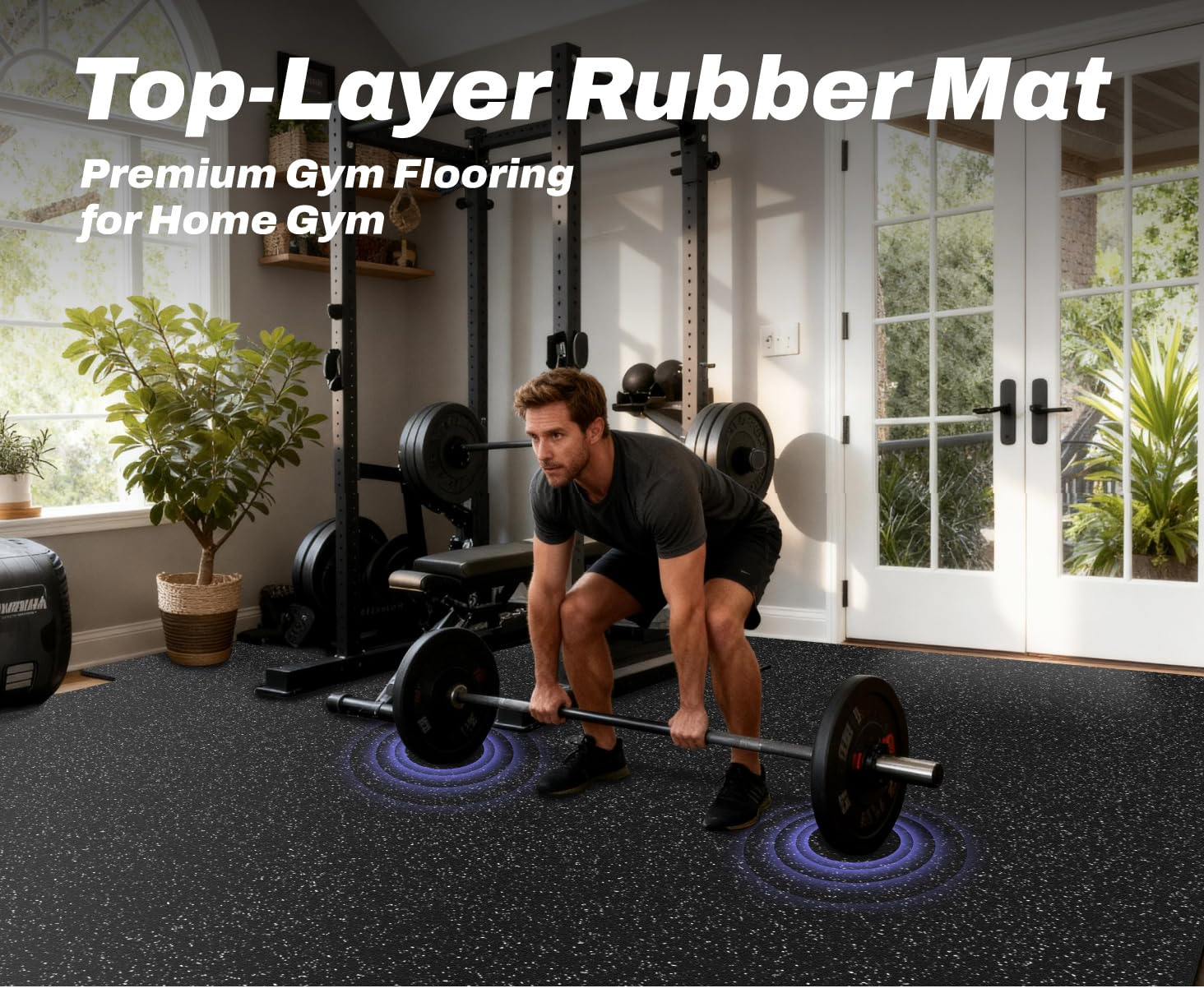
For home gyms with barbells and dumbbells, rubber mats (at least 3/8” thick) are best. They absorb shock and prevent dents. Interlocking rubber tiles are easy to set up, and you can replace damaged pieces.
Tip: Horse stall mats (usually 4’x6’, 3/4” thick) are affordable and strong. They’re used by many home gym owners.
Common mistake: Using foam under weights. Foam compresses too much and can break down fast.
Concrete With Mats
If your gym is in a garage or basement, you may have concrete. Don’t lift directly on it. Place thick rubber mats to prevent cracks and protect your equipment.
Example: For Olympic lifts, use a platform made from plywood topped with rubber.
Vinyl With Underlay
Vinyl alone is not enough for weightlifting. If you prefer vinyl, add a dense rubber underlay. This helps absorb impact and reduces noise.
Tip: Check the maximum weight rating of your vinyl floor before placing racks.
Best Flooring For Cardio
Cardio workouts include running in place, jumping, HIIT, and dancing. These activities need a floor that cushions impact and reduces vibration.
Foam Tiles
Foam tiles are comfortable for bodyweight and aerobic exercises. Interlocking foam squares are easy to set up and move. They cushion your feet and reduce joint strain.
Tip: Choose high-density foam for better durability.
Common mistake: Using low-density foam, which tears quickly under shoes.
Cork Flooring
Cork is soft and absorbs shock. It’s good for cardio, but not for heavy equipment. Cork also reduces noise, making it ideal for apartments.
Rubber Flooring
Rubber is also great for cardio. It’s less soft than foam, but it lasts longer. It’s easy to clean after sweaty workouts.
Tip: For treadmill or stationary bikes, use rubber mats underneath to protect the main floor.
Best Flooring For Noise Reduction
Noise is a big concern for many home gym owners. If you live in an apartment or share walls with neighbors, you need a floor that absorbs sound.
Rubber Tiles
Rubber is the best material for noise reduction. Its dense structure absorbs sound from dropped weights and jumping. Thicker mats work better.
Example: 1/2” rubber tile reduces noise by up to 40%, based on manufacturer data.
Carpet
Carpet naturally muffles sounds. Low-pile carpets are better for gyms because they’re easier to clean. For weightlifting, combine carpet with rubber mats.
Cork Tiles
Cork absorbs vibration and sound. It’s eco-friendly and comfortable. However, it may dent under heavy equipment.
Tip: Seal cork to protect from moisture and odors.
Multi-layer Solutions
For the best noise reduction, use a multi-layer floor: rubber over foam, or rubber over carpet. This combo absorbs both impact and vibration.
Non-obvious insight: Many people miss that noise travels through walls and floors, not just air. Thick mats help, but sealing gaps and using wall panels can further reduce noise.
Credit: www.ebay.com
Installation Tips And Mistakes To Avoid
Installing home gym flooring seems simple, but many people make mistakes that cost time and money.
Tips For Easy Installation
- Measure your space carefully. Buy extra tiles/mats for mistakes and odd corners.
- Clean the base floor before installing. Dust or moisture can cause mats to slip or mold.
- Check thickness for your workout. Thicker mats (1/2”+) are needed for heavy weights.
- Choose interlocking tiles for easy setup and future changes.
- Leave room for expansion. Some materials expand with heat or moisture.
- Seal cork or carpet if you sweat a lot. This prevents odors and stains.
Common Mistakes
- Mixing foam and weights: Foam breaks down under heavy weights. Use rubber for lifting zones.
- Ignoring moisture: In basements or garages, moisture can cause mold. Choose water-resistant materials.
- Not securing mats: Mats can slide during cardio. Use double-sided tape or anchor mats.
- Skipping underlay: For vinyl or hardwood, use a shock-absorbing underlay to protect joints and reduce noise.
Example: A garage gym owner placed foam mats under his squat rack. After a month, the foam compressed and tore, causing instability. Switching to rubber solved the problem.
Maintenance And Cleaning
A clean gym is a safe gym. Different floors need different care.
Rubber
Rubber is easy to clean. Sweep or vacuum regularly. Use mild soap and water for spills. Avoid harsh chemicals.
Tip: Let rubber mats air out after installation to reduce smell.
Foam
Foam tiles attract dust. Use a vacuum and a damp cloth. Avoid soaking, as foam absorbs water.
Vinyl
Vinyl is water-resistant. Mop with gentle cleaners. Avoid abrasive pads.
Carpet
Vacuum often. Use a carpet cleaner for sweat or spills. Dry immediately to prevent mold.
Cork
Sweep and mop with gentle cleaners. Seal cork every year to prevent moisture damage.
Turf
Vacuum or sweep. For stains, use warm water and mild soap.
Non-obvious insight: Many gym owners forget to clean under mats. Dirt and moisture can build up, causing smells and damage.
How To Choose The Right Flooring For Your Home Gym
Picking the best home gym flooring depends on your workouts, space, and budget.
Questions To Ask
- What exercises will you do? Heavy lifting, cardio, yoga, or a mix?
- Where is your gym? Basement, garage, spare room, apartment?
- How much noise is a concern? Are neighbors or family nearby?
- What’s your budget? Flooring ranges from $1–$10 per square foot.
Step-by-step Guide
- List your main workouts. If you lift heavy, rubber is your best bet. For yoga, foam is fine.
- Check your room type. Moisture-prone rooms need water-resistant floors.
- Measure noise needs. If noise is a big issue, choose rubber or cork.
- Set your budget. Buy the thickest mats you can afford for safety.
- Consider cleaning. If you sweat a lot, avoid carpet. Choose easy-to-clean options.
Example: If you live in an apartment and do HIIT, a thick rubber mat over carpet reduces noise and cushions your jumps.
Comparing Top Flooring Types For Different Needs
Let’s see which floors are best for each workout type.
| Workout Type | Best Flooring | Runner-Up |
|---|---|---|
| Heavy Weightlifting | Rubber Mats | Concrete with Rubber Mats |
| Cardio | Foam Tiles | Rubber Flooring |
| Yoga/Pilates | Foam Tiles | Cork Flooring |
| Noise Reduction | Rubber Tiles | Cork Tiles |
| Multi-Use | Vinyl with Rubber Underlay | Rubber Tiles |
| Budget-Friendly | Foam Tiles | Horse Stall Mats |
Tip: For mixed gyms, use different floors for each area. Rubber for weights, foam for stretching, turf for agility.
Real-life Examples: Home Gym Flooring Success Stories
Garage Gym Transformation
John wanted a garage gym for weightlifting and HIIT. He installed 3/4” rubber mats over concrete. The mats protected his floor, reduced noise, and cleaned up easily. He added foam tiles in the stretching area. After six months, the mats showed no wear, and his family noticed less noise.
Apartment Gym Solution
Sara lived in a second-floor apartment. She worried about disturbing neighbors. She chose thick cork tiles under rubber mats. The combo absorbed sound and gave her a comfortable surface for cardio and yoga. She sealed the cork to prevent odors.
Her workouts no longer bothered neighbors, and cleaning was easy.
Basement Gym Upgrade
Mike had carpet in his basement gym. He found it hard to clean and noticed odors after workouts. He switched to vinyl with a rubber underlay. Now he wipes up sweat quickly, and the rubber layer cushions his jumps.
Sled And Agility Area
Lisa wanted to push sleds and do agility drills. She installed a turf strip with rubber mats on both sides. The turf was perfect for sleds, and rubber mats protected her floor during weightlifting.
Flooring For Special Cases: Kids, Seniors, And Pets
If your home gym is used by children, older adults, or pets, flooring matters even more.
Kids
Kids need soft, safe floors. Foam tiles are best for play and light exercise. Avoid slippery surfaces. Rubber works for older kids who lift weights.
Seniors
Older adults need floors that cushion joints and prevent slips. Cork and rubber are ideal. Avoid hard surfaces like concrete.
Pets
If pets join you in the gym, pick floors that resist scratches and are easy to clean. Rubber and vinyl are pet-friendly. Carpet can trap fur and odors.
Non-obvious insight: Many pet owners forget that nails can tear foam and carpet, so rubber is safer.
Budget Planning: Flooring Costs And What To Expect
Flooring costs depend on material, thickness, and installation. Here’s a simple breakdown:
- Rubber mats: $2–$8 per sq ft
- Foam tiles: $1–$3 per sq ft
- Vinyl plank: $2–$5 per sq ft
- Carpet: $1–$6 per sq ft
- Cork tiles: $3–$8 per sq ft
- Hardwood: $5–$10 per sq ft
- Concrete: $1–$3 per sq ft (mats extra)
- Turf: $5–$10 per sq ft
Installation: Most tiles and mats are DIY-friendly. For rolls or large areas, professional installation costs $1–$3 per sq ft.
Tip: Buy extra tiles for future repairs. Colors or textures may change over time.
Common mistake: Skipping underlay to save money. This can lead to injuries or noisy workouts.

Credit: www.ironcompany.com
Flooring Safety: Protecting Your Body And Equipment
Safety is a top concern. The right floor reduces injury risk, protects your gear, and keeps your gym functional.
Joint Protection
Thick, cushioned floors reduce shock to knees, ankles, and hips. Foam and cork are best for cardio. Rubber protects during heavy lifts.
Equipment Protection
Dropped weights can crack concrete or dent hardwood. Rubber mats save your floor and your equipment.
Slip Prevention
Sweaty workouts can make floors slippery. Rubber and cork are non-slip. Avoid glossy vinyl or wood.
Fire And Chemical Safety
Some mats (especially cheap foam) may not be fire-resistant. Check ratings before buying. Avoid mats with strong chemical smells, which can be harmful.
Non-obvious insight: Many budget mats use recycled tires. This is eco-friendly, but some people may be sensitive to the smell.
Environmental Impact: Eco-friendly Flooring Choices
If you care about the environment, choose materials that are recyclable or made from natural sources.
Cork
Cork is harvested from tree bark, not the whole tree. It’s sustainable and biodegradable.
Rubber
Many rubber mats use recycled tires. This reduces landfill waste. Look for mats with low VOC emissions.
Bamboo
Bamboo is fast-growing and sustainable. It’s less common for gyms but works for light exercise.
Carpet
Choose carpet made from recycled fibers. Avoid those with strong chemicals.
Tip: Eco-friendly mats may cost more, but they’re better for air quality and the planet.
Home Gym Flooring For Different Spaces
The best flooring depends on your gym’s location.
Basement
Basements can be damp. Use water-resistant mats (rubber, vinyl, cork). Avoid carpet unless you have strong moisture control.
Garage
Garages have concrete floors. Use thick rubber mats for weights, foam for stretching. Avoid wood or carpet.
Spare Room
You can use almost any floor. For a stylish gym, combine vinyl with rubber mats.
Apartment
Noise is a concern. Use thick rubber or cork, layered over carpet. Secure mats to prevent movement.
Example: In a small apartment, Sara layered cork tiles under rubber mats. This absorbed sound and protected her floor.
Advanced Noise Reduction Solutions
If you still have noise issues, try these extra steps.
Floor Underlayment
Install a dense underlay under your main floor. This absorbs vibration and sound.
Wall Panels
Add acoustic panels to walls. This traps sound and prevents echoes.
Door Seals
Seal gaps under doors. Sound escapes easily through open spaces.
Double-layer Mats
Use two layers of mats: foam under rubber. This absorbs more shock and noise.
External resource: For more details on soundproofing, see Soundproofing Company.

Credit: www.ironcompany.com
Flooring Brands And Where To Buy
Popular brands include Rogue, Rubber-Cal, and ProsourceFit for rubber mats. EVA foam tiles are available from BalanceFrom and Amazon Basics. Cork tiles can be found at Home Depot and Lowe’s.
Tip: Local farm stores sell horse stall mats, which are strong and affordable.
Common mistake: Buying mats without checking thickness. Thin mats may not protect your floor.
Flooring For Small And Large Gyms
Small Gyms
Interlocking tiles are best. You can change layouts and replace damaged tiles. Foam is good for stretching, rubber for weights.
Large Gyms
Rubber rolls cover big spaces. Professional installation may be needed. Combine materials for different zones.
Tip: For big gyms, buy commercial-grade mats for durability.
Customizing Your Gym Floor
You can mix and match materials for different zones.
- Rubber for lifting
- Foam for stretching
- Turf for agility
- Cork for yoga
Example: John used rubber mats in his squat area, foam tiles for stretching, and a turf strip for sled work.
Upgrading Old Floors
If your gym floor is worn out, upgrade in steps.
- Remove old mats or carpet.
- Clean the base floor.
- Install new mats or tiles.
- Seal and secure edges.
Tip: Don’t throw away old mats. Use them under equipment or in the garage.
Frequently Asked Questions
What Thickness Is Best For Home Gym Flooring?
The best thickness depends on your workouts. For heavy weightlifting, use at least 3/8” to 1/2” rubber mats. For cardio or yoga, 1/4” foam tiles are enough. Thicker mats absorb more shock and noise.
How Do I Reduce Noise In My Home Gym?
To cut noise, use thick rubber or cork mats. Layer mats if possible. Seal gaps under doors, and add wall panels if needed. Avoid hard floors like concrete or wood.
Can I Install Gym Flooring Myself?
Yes, most interlocking tiles and mats are DIY-friendly. Just measure your space, clean the base, and install. For rolls or large areas, you may need help or professional installation.
What’s The Best Flooring For Multi-use Gyms?
For gyms with weights, cardio, and stretching, vinyl with rubber underlay or rubber tiles work best. Use different materials for each zone if possible.
How Do I Clean Home Gym Flooring?
For rubber and foam, sweep or vacuum, then wipe with mild soap and water. For carpet, vacuum and use a carpet cleaner for spills. For cork and vinyl, mop with gentle cleaners. Always dry floors after cleaning.
Finding the best home gym flooring is more than picking a color or pattern. Your floor protects your body, your equipment, and your home. Rubber is top for weightlifting and noise, foam works for cardio and yoga, and cork is great for eco-friendly comfort. Choose based on your workouts, your space, and your budget. With the right floor, you’ll enjoy safer, quieter, and more effective workouts for years to come.